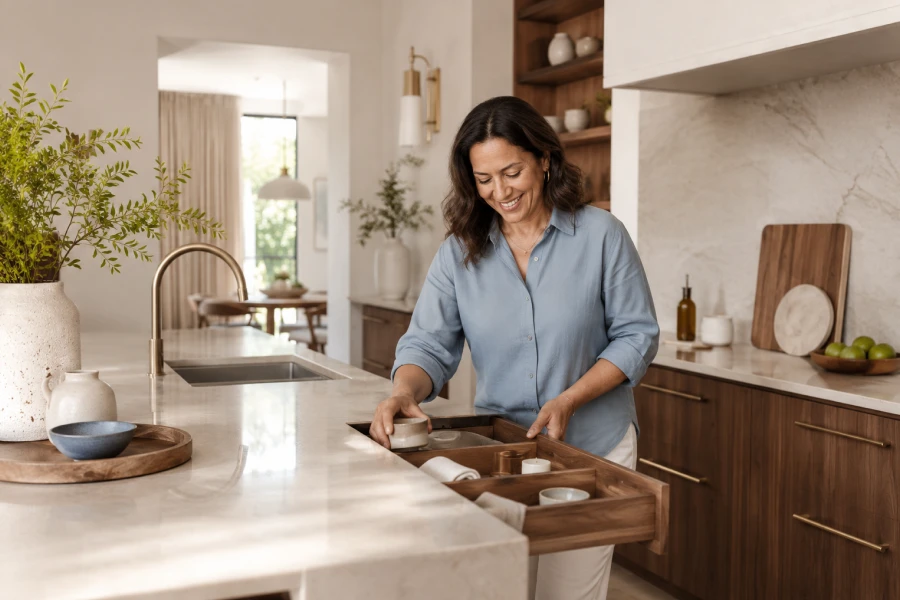
Kitchen decluttering is not only about removing objects from the counter. It is about restoring a clear path between the refrigerator, sink, prep area, and stove. When that path is blocked by duplicates, appliances, and loose papers, even a simple meal feels heavier. A more open kitchen creates room for movement and attention. It also reveals what the space is trying to tell you. You may discover that the problem is not too little storage. The problem may be too many tools assigned to the wrong jobs. Begin with curiosity rather than a strict rule about minimalism. The goal is a kitchen that supports your real habits without surrounding them with noise. A lighter week often starts with one cleared surface.
Choose one counter and remove everything from it. Set each item aside, then ask whether it belongs there because you use it daily or because it never found another home. This distinction is more useful than deciding whether an object looks attractive. Keep the items that help you cook, clean, or prepare for tomorrow. Move the rest to a temporary review area. Smart pantry storage can help later, but first give the existing cabinets an honest look. Clear space makes hidden patterns obvious. You may see appliances you never use, mugs that overflow their shelf, or papers that belong elsewhere. Let the empty counter show you what the kitchen actually needs. That visual pause creates momentum without forcing a perfect result.
Work zones should follow the tasks that happen there. Keep knives, boards, and mixing tools close to the prep area. Store dishes near the dishwasher or drying zone. Put coffee supplies together where mornings begin. Place food containers near the counter where leftovers are packed. This kind of arrangement reduces unnecessary steps when the room gets busy. Stress-free meal planning is easier when ingredients and equipment do not make you cross the kitchen repeatedly. Avoid building zones around cabinet categories alone. Build them around actions. When every drawer supports a familiar task, cleanup becomes faster and cooking feels less fragmented. The room starts to carry some of the mental load for you.
Decluttering also helps you see the waste hiding in plain sight. Expired packets, duplicate spices, and forgotten specialty tools often collect behind the everyday items. Pull these pieces forward during the reset. Decide what can be used soon, donated where appropriate, recycled, or discarded. This is not about blaming past purchases. It is about learning what your kitchen receives faster than it uses. A low-clutter cooking flow leaves space for the foods and tools that genuinely support your week. Keep one small bin for items that need to go elsewhere in the home. Use it as a temporary bridge, not a permanent landing spot. Once the kitchen stops holding unrelated things, it becomes easier to notice what you already have.
The best tools earn their room through frequency, versatility, or joy. A large appliance that appears once a year may belong on a high shelf or in another storage area. A favorite pan deserves easy access because it earns that convenience. Keep multiples only when they solve a real problem, such as several lunch boxes or enough plates for a family meal. Store bulky pieces by the place where you naturally use them. Choose dividers, hooks, or trays only after you see the real shape of the collection. This prevents organizers from becoming a more polished form of clutter. Aim for drawers that close easily and shelves that show their contents. Practical access is a stronger design choice than filling every inch. That kind of ease makes daily cooking feel more generous.
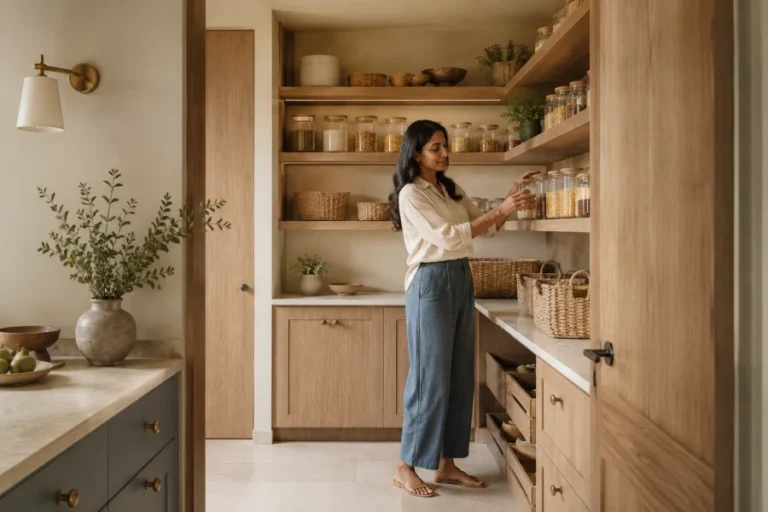
A kitchen stays manageable through small repeated actions. Put away groceries with the same zones in mind. Clear the counter before bed, even when the rest of the room is not perfect. Make a quick decision about mail, reusable bags, and loose objects before they settle in. Pantry shelf organization can support this rhythm by giving food a reliable return path. Notice which area drifts most often. That is usually where the system needs fewer items or a clearer boundary. Keep the maintenance brief enough to fit into normal life. Ten minutes after dinner can protect the work of an entire weekend. Consistency matters because the kitchen is used constantly, not because it must always look untouched.
A fresh kitchen does not need to feel empty. It needs to make room for the work and rituals that matter most. Start with the surface that frustrates you every day. Remove what does not belong, then arrange the remaining tools around real tasks. Let your habits guide the cabinets, drawers, and pantry. The result will feel personal because it was built from your own movement through the room. Over time, the open space begins to feel like an invitation rather than an absence. Cooking becomes easier to start. Cleaning becomes easier to finish. That is the quiet power of a thoughtful reset.


Leave a comment