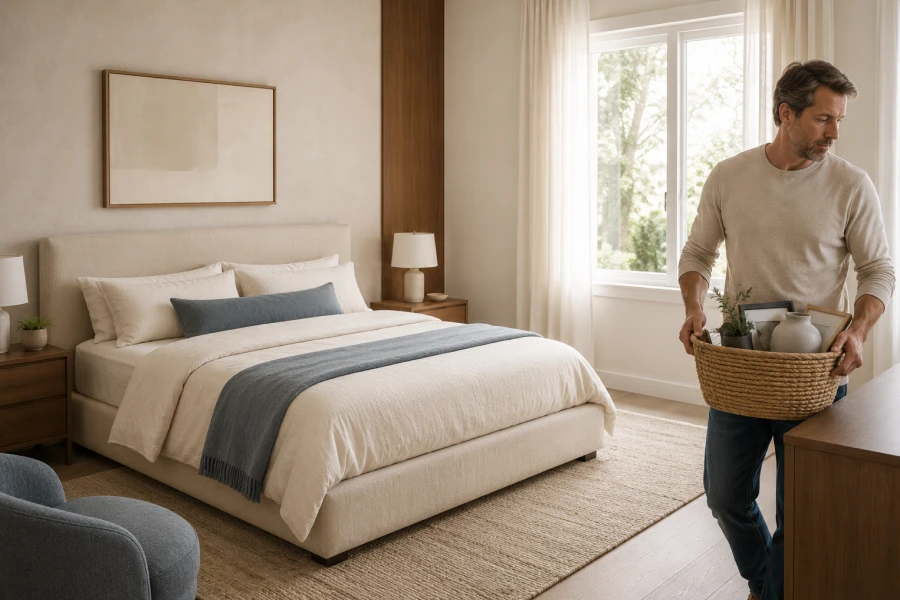
A boutique hotel bedroom feels special because it offers a clear sensory experience instead of a crowded collection of ideas. The room asks very little of you, yet it seems to anticipate what you need. The bed feels inviting, the lighting feels deliberate, and the surfaces feel calm. You can recreate that feeling at home without copying a hotel room exactly. Begin by paying attention to the moments that make a bedroom feel restorative. Notice what you see from the doorway, what you touch before sleep, and what greets you in the morning. Those moments matter more than a long shopping list. A bedroom becomes elevated when its layers work together. The aim is comfort with intention, not luxury for its own sake. Everything else can grow from that quieter intention.
Restful rooms usually begin with visual restraint. Stand at the bedroom door and identify the first three elements your eye notices. Ideally, they should support one another instead of competing for attention. A well-made bed, a quiet wall, and a warm pool of light can already create a sense of arrival. Boutique hotel styling starts with deciding what the room should feel like at the end of a long day. Choose words such as soft, tailored, airy, grounded, or cocooning. Let those words guide the edit. Remove objects that disrupt the mood without serving a real function. Leave space around the pieces that matter. A calm view makes the room feel more generous before you add anything new.
Mood becomes easier to create when you limit the palette. Use two or three main tones, then add contrast through texture rather than extra color. Creamy linens, warm wood, muted blue, stone, or soft charcoal can feel rich when repeated with purpose. Your luxury bedroom atmosphere should not depend on matching every object. It should depend on a consistent emotional temperature. Repeat one material or tone in different scales across the room. A slim wood frame can echo a larger nightstand, while a blue cushion can answer a darker throw. These quiet connections make the space feel designed rather than assembled. Keep strong patterns limited so the bed remains the visual anchor. The room should feel settled even when you have not styled every corner.
Proportion is the difference between a room that looks polished and a room that feels slightly off. Choose bedside tables that support the scale of the bed rather than disappearing beside it. Use lamps that create useful pools of light without crowding the surfaces. A bench, chair, or rug can make the bed feel grounded when it has enough breathing room around it. Bedroom color palette decisions also influence proportion because dark tones feel heavier and light tones feel more expansive. Layer the bed from broad shapes to smaller accents. Start with the main cover, then add pillows, a textured throw, and one refined finishing layer. Do not use every pillow you own. A few generous pieces create a stronger invitation than many small ones. Balance comes from enough contrast, not more accessories.
Lighting changes the room from a daytime space into an evening retreat. Use more than one source so the overhead fixture never has to do all the work. Bedside lamps, a soft wall sconce, or a shaded floor lamp can create depth at different heights. Place the warmest light closest to the places where you unwind. Let brighter light handle reading, dressing, or practical tasks. Keep cords and controls easy to reach from the bed. Notice how the room looks after sunset before choosing new decor. Sometimes the missing element is not another object. It is a softer light source that changes everything already present. Evening atmosphere is built gradually, just like comfort.
Editing is where the room begins to look intentional. Keep the surfaces that support rest clear enough to use without moving five objects first. Choose one meaningful accent for a nightstand instead of several small pieces. Store chargers, skincare, and everyday items in a way that keeps them close but not constantly visible. Let art, textiles, and a few natural materials carry the personality of the room. Avoid collecting matching decor solely because it belongs to a set. A bedroom becomes more memorable when every detail has a reason to stay. Try removing one item from each surface and living with the change for a week. The room may feel warmer because it is easier to use. That is a better measure of style than fullness.
Finish the bedroom by prioritizing the experience of rest. Choose bedding that feels good against the skin and a throw that invites you to slow down. Let the room contain a few elements that make bedtime easier: a lamp, water, a book, or a place to set tomorrow’s clothes. These details turn beauty into hospitality. A polished bedroom does not have to be precious. It should be comfortable enough to live in every day. Start with the bed, soften the light, and edit the surfaces. Then add only what improves the feeling. The result will be personal, serene, and quietly elevated. That is the essence of a room that feels like a well-kept escape.




Leave a comment