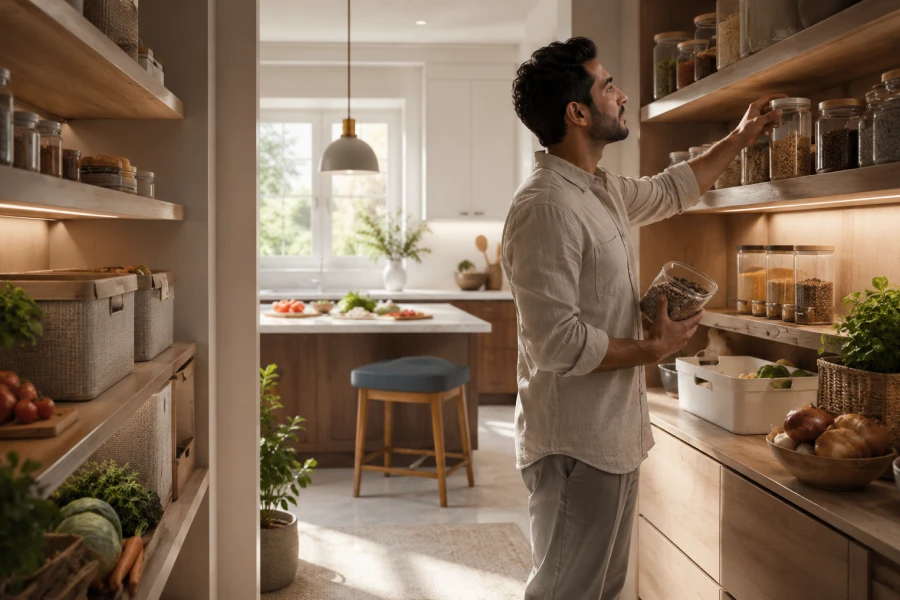
Pantry organization ideas work best when they make the next meal easier to begin. A well-organized shelf should answer simple questions before you open three cabinets. What can I cook tonight? Which staples are almost gone? Which foods should be used before the next shopping trip? When the answers are visible, daily cooking loses some of its pressure. The pantry becomes part of the meal routine instead of a separate project you keep postponing. Begin by following a normal day from breakfast through dinner. Notice which foods you reach for, which items get lost, and where the small delays happen. Those everyday patterns are the most useful blueprint for a pantry that feels lighter.
Think about movement before choosing bins. The morning rush may need oats, coffee, lunch snacks, and water bottles within one easy reach. Dinner preparation may need grains, oils, sauces, and flexible meal staples close to the kitchen entrance. Group these items according to when they are used rather than according to packaging alone. Expiration date tracking becomes easier when similar foods are not scattered across three shelves. Keep the oldest items closest to the front. Place new groceries behind them when you restock. This simple rotation prevents food from quietly disappearing into the back. A pantry does not need elaborate labels to become understandable. It needs a view that helps you make quick decisions.
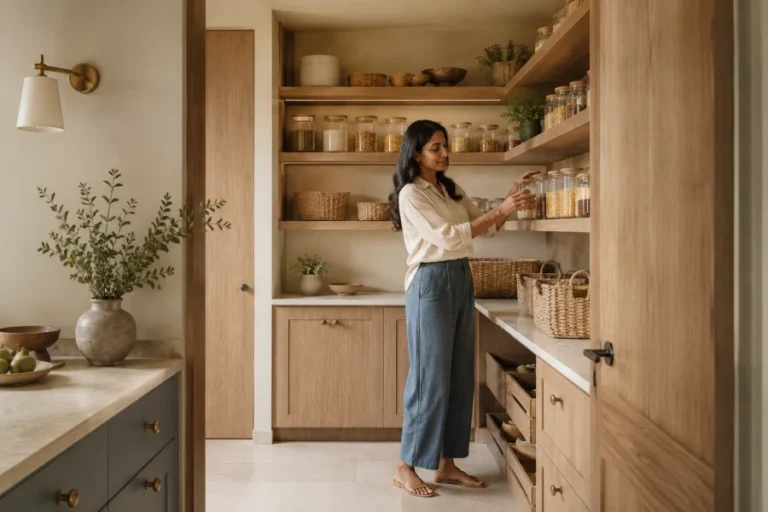
Visibility protects both your budget and your attention. Use clear containers where loose packages create confusion, but keep recognizable packaging when it helps you identify a product quickly. Arrange items so taller pieces do not hide the shorter ones. Use shallow baskets for packets that would otherwise slide around. Leave enough open space to see where each category begins and ends. Organized kitchen habits grow when putting groceries away feels quick and intuitive. Make a small section for items that need to be used soon. This can be a tray, a shelf edge, or a single front row. The goal is not to create urgency everywhere. It is to keep the next useful ingredient from being forgotten.
Rebuying often happens because the pantry provides a poor view of what is already there. Before shopping, scan the staples you use most and add only the missing items to your list. Keep backstock in one dedicated area rather than spreading it across the room. This helps you see the difference between active supply and extra supply. A family pantry refresh can include a simple weekly meal that uses one overlooked ingredient. That habit turns a reset into a source of ideas instead of another household task. Do not insist on finishing every product before buying anything new. Instead, keep the quantity realistic for your household. The pantry should support variety without collecting unnecessary volume. Clear limits make grocery decisions calmer.
Your cooking style should shape the layout more than any trend. A family that bakes often needs a different arrangement than someone who relies on quick weeknight meals. Put the most common ingredients where your hands naturally reach. Store specialty items together but slightly apart from the daily path. Use lower shelves for heavier containers and higher shelves for light backups. This kind of tailoring keeps the room useful after the initial reset fades. Avoid copying a pantry image that requires more time than you have. Build a system that makes sense during an ordinary week. When the layout matches the way you cook, maintaining it feels less like a rule. It simply becomes part of starting dinner.
Perfect labels are optional, but clear signals are not. Use repeated container shapes, shelf groupings, or simple visual spacing to create order. A small kitchen storage solutions approach can rely on baskets, risers, and narrow bins when square footage is limited. Keep the most used foods between waist and shoulder height. Make snack access easy without letting it take over the entire room. Reserve one small section for overflow during busy weeks. That flexibility prevents temporary groceries from becoming permanent clutter. When you can scan the shelf without reading anything, the system is already doing valuable work. Good organization should be felt in the speed of the routine, not just seen in a photograph. That ease matters more than a perfectly styled shelf.
The last ten minutes before dinner are often where a pantry proves its value. When the staples are visible, you can build a meal without searching through partial packages. Keep one adaptable section stocked with ingredients that combine easily. Check it before meal planning, and replenish it slowly rather than all at once. Give yourself permission to revise the layout after busy periods. A pantry is not static because your schedule and appetite are not static. The strongest systems stay flexible while preserving a few reliable zones. Start with the part of the shelf that creates the most friction. Once that area works better, the rest of the kitchen starts to feel more available. That progress compounds with every meal you make.


Leave a comment